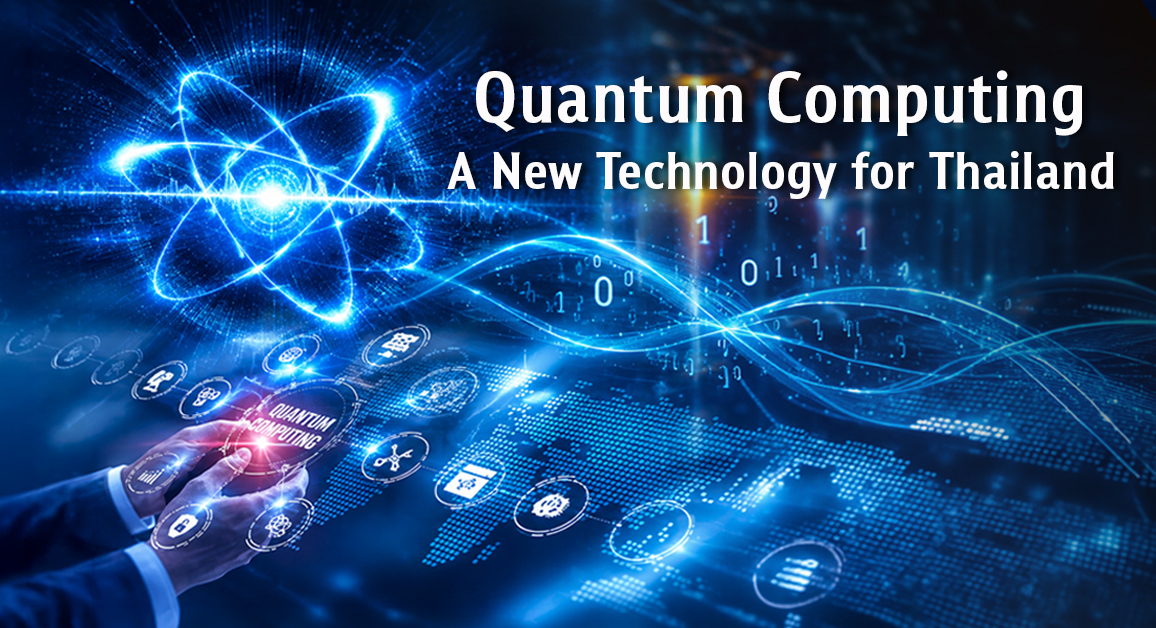

BANGKOK, THAILAND, November 25, 2026 /EINPresswire.com/ — Chulalongkorn University physicists are urging Thailand to build quantum expertise and
strengthen research support to prepare for opportunities in computing, industry and data
security. With specialists taking years to train, the university’s learning programs offer a way to
start preparing now.
Assistant Professor Dr. Thiparat Chotibut, Assistant Professor Dr. Salinporn
Kittiwatanakul and Dr. Supanut Thanasilp, of Chula’s Department of Physics, Faculty
of Science, said preparation should begin before quantum computing becomes widely
available. Chula’s Siam Quantum Square (SQ²) offers educational activities and free online
courses for students and the public.
Thailand began developing a national quantum technology roadmap in 2017–2018, with initial
research funding following in 2020. The researchers emphasized that sustained investment in
knowledge and people would help the country participate in emerging industries.
Dr. Thiparat said Thailand need not build an entire quantum computer to compete with major
technological powers. Developing specific components or specialized expertise could offer a
route into the industry’s supply chain. Experience in quantum sensing and communication,
which share some of the same underlying principles, could also lay the groundwork for
advances in computing.
Quantum computing uses quantum bits, or qubits, to process information differently from
conventional computers. Potential applications include molecular simulations for drug and
materials development, investment portfolio optimization and energy resource allocation.
However, the technology remains under development. Hardware costs, qubit reliability,
computational errors and the need to identify suitable applications continue to limit practical
use. Quantum computers are expected to complement conventional processors, with each
handling tasks suited to its capabilities.
Security preparation is another priority. Dr. Salinporn said sufficiently powerful quantum
computers could threaten RSA encryption by solving the mathematical problems underpinning
its protection. “A quantum computer is like a sword, but we also need to develop a shield to
protect ourselves,” she said.
That protection is being developed through approaches such as post-quantum cryptography,
designed to withstand attacks from quantum computers, and quantum key distribution, which
can help detect eavesdropping during the exchange of encryption keys. Dr. Supanut urged
organizations to review their encryption and plan upgrades, especially for data that must remain
confidential for years.
Through education and research, Chula can help Thailand develop the expertise to make
informed decisions about quantum technology—from protecting sensitive data to identifying
applications that could benefit local industries.
Read the article at https://www.chula.ac.th/en/highlight/433581/
Chula Communication Center
Chulalongkorn University
Legal Disclaimer:
EIN Presswire provides this news content “as is” without warranty of any kind. We do not accept any responsibility or liability
for the accuracy, content, images, videos, licenses, completeness, legality, or reliability of the information contained in this
article. If you have any complaints or copyright issues related to this article, kindly contact the author above.

Media gallery