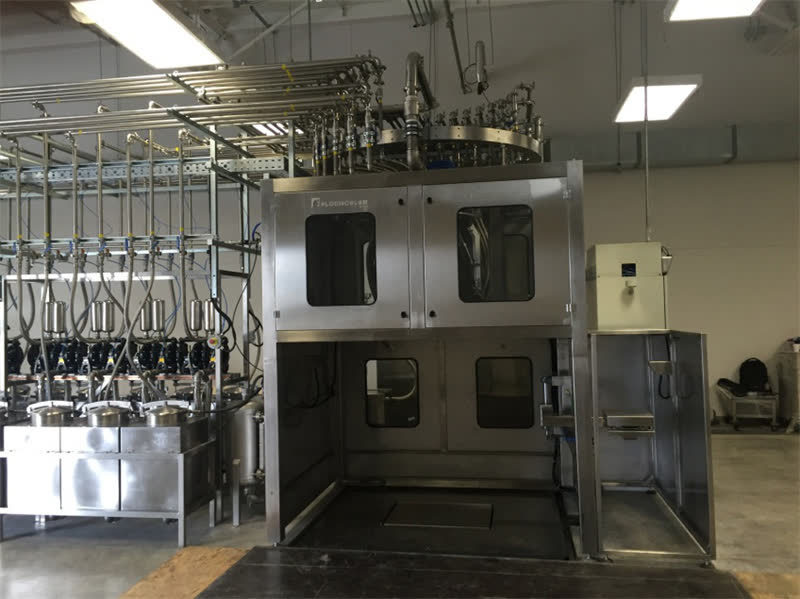

TONGZHOU, BEIJING, CHINA, November 24, 2026 /EINPresswire.com/ — GOLDEN COLOR: Delivering Zero-Defect Color Formulation as a Certified Paint Dispensing System Solutions Provider
Industrial paint and coating manufacturing sectors face constant pressure to deliver precise, repeatable color hues across thousands of commercial production batches. Modern architectural coatings, high-performance automotive finishes, and industrial protective primers require strict adherence to stringent formula standards. Slight deviations in color shade lead directly to visible batch discrepancies, customer rejection, and substantial financial losses for manufacturing enterprises. Traditional color compounding relies heavily on manual weighing, visual color inspection, and disparate mechanical equipment. These legacy methods introduce high error rates, environmental pollution, and excessive raw material waste. Industrial enterprises now adopt advanced automated systems to streamline color preparation and reduce operational bottlenecks. Beijing Golden Color Tech Co., Ltd. builds sophisticated fluid dispensing networks that transform traditional operational workflows. Operating as a Certified Paint Dispensing System Solutions Provider, the organization engineers integrated hardware and software architectures designed to eliminate human error, enhance batch repeatability, and optimize overall manufacturing efficiency across global production facilities. Advanced engineering practices ensure that every fluid pathway maintains structural integrity under continuous industrial operation.
Conquering the Color Consistency Challenge in Modern Coatings Manufacturing
Industrial facilities producing high-performance paints, wood varnishes, and industrial inks encounter complex challenges regarding reliable color replication. Pigment dispersion requires rigorous control over physical properties, chemical interactions, and environmental conditions. When factory workers measure liquid colorants and base resins manually, small variations occur routinely. Human fatigue, ambient lighting shifts, and inconsistent measuring techniques cause noticeable shade discrepancies between consecutive production runs. Furthermore, open-container handling exposes volatile solvents and liquid colorants to atmospheric air and moisture. Continuous evaporation alters fluid density and viscosity, shifting the final color profile away from target specifications. Industrial plants must eliminate these manual variables to maintain competitive market positions and satisfy strict customer demands. Advanced chemical dispensing architecture provides a reliable solution by automating raw material transfer from bulk storage containers straight to mixing vessels. Closed-loop delivery networks protect sensitive chemical components from contamination while maintaining consistent flow rates throughout the entire production cycle. Proper temperature regulation inside storage tanks prevents premature curing or separation of active pigment particles, ensuring uniform raw material readiness before the dispensing phase begins. Moreover, strict containment protocols minimize volatile organic compound emissions, supporting modern environmental compliance goals.
Precision Engineering: Digital Color Matching and Spectrophotometer Integration
Modern color formulation relies on digital precision rather than subjective human judgment. Advanced production facilities integrate spectrophotometer hardware directly into centralized software environments. When quality control teams scan master color swatches, spectrophotometric sensors capture precise spectral reflectance data across multiple light wavelengths. The integrated software processes this extensive data through a comprehensive digital color database. Instead of depending on operator intuition, the system calculates exact pigment ratios using sophisticated numerical algorithms. This digital approach guarantees absolute color reproducibility across different shifts and distinct manufacturing plants while successfully overcoming metamerism challenges under varied lighting conditions. Moreover, centralized recipe management software records every historical formula securely in digital archives. Operators retrieve, verify, and execute saved recipes instantly, reducing setup times and preventing manual data entry errors. The digital database also supports rapid recipe modifications, allowing manufacturers to adapt quickly to changing market trends and specific client requirements without interrupting ongoing production lines. Historical formula tracking further aids technical teams in analyzing past performance metrics to refine future colour development projects.
Sub-Gram Accuracy and Automated Control: Eliminating Operator Variance
Achieving uniform color distribution demands exceptional mechanical precision during component metering. Automated dispensing machinery utilizes high-resolution load cells and specialized pulse-frequency dosing valves to control fluid delivery. Modern dosing systems achieve up to 0.1g dosing precision, ensuring even micro-quantities of concentrated colorants are measured accurately every single time. Following liquid addition, efficient physical blending becomes critical for achieving homogenous consistency and preventing pigment agglomeration. Manufacturing plants frequently deploy a robust two-axis paste mixer to blend high-viscosity pastes thoroughly without introducing unwanted air bubbles or thermal degradation. Additionally, automated fluid handling networks incorporate modular components such as water-based single-point dispensing units to manage auxiliary solvent streams smoothly. Automated cleaning cycles utilize minimal solvent to flush distribution lines between batches, preventing cross-contamination without generating large volumes of hazardous wastewater. These automated mixing and dispensing units remove physical labor from the blending cycle, protecting workers from direct exposure to hazardous chemicals, strong odors, and volatile organic compounds. Standardized mechanical operations also ensure uniform product quality across large-scale industrial operations, reducing rework rates and raw material loss significantly.
Traceability, Quality Assurance, and CE-Certified Reliability
Industrial accountability requires complete production traceability from raw material intake to final packaging. Centralized control software tracks every batch parameter meticulously, recording raw material usage, dispensing timestamps, and operator identification codes. This comprehensive data logging simplifies quality assurance audits and reduces manual quality control workloads significantly. Facility managers analyze historical production logs instantly to identify operational trends, detect anomalies, and optimize overall material consumption. Beyond software capabilities, physical equipment reliability remains essential for meeting international manufacturing standards. GOLDEN COLOR (Beijing Golden Color Tech Co., Ltd.) adheres to rigorous manufacturing protocols to guarantee structural safety and operational stability. The enterprise holds official international credentials, including CE certification, confirming that all electrical enclosures, mechanical assemblies, and control interfaces meet strict European safety, health, and environmental protection requirements. Through continuous engineering innovation, GOLDEN COLOR delivers reliable automated infrastructure that empowers global coatings producers to achieve superior product quality and operational excellence. Industrial enterprises seeking comprehensive technical data and automated dispensing solutions can explore the official portal at https://www.dispensingsystem.com/.
GOLDEN COLOR
GOLDEN COLOR
Legal Disclaimer:
EIN Presswire provides this news content “as is” without warranty of any kind. We do not accept any responsibility or liability
for the accuracy, content, images, videos, licenses, completeness, legality, or reliability of the information contained in this
article. If you have any complaints or copyright issues related to this article, kindly contact the author above.

Media gallery