
Warfighter Experience: The Strategic Weapon For Portfolio Acquisition Executives
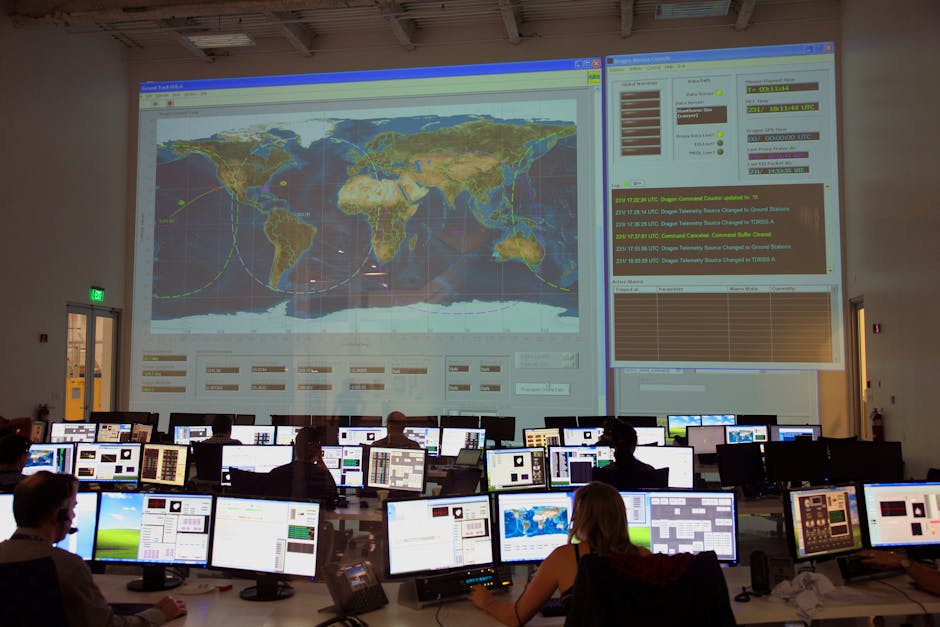 Photo from Pexels
Originally Posted On: https://www.rocketcom.com/insights/warfighter-experience-the-strategic-weapon-for-portfolio-acquisition-executives/
The Moment We Cannot Afford to Miss
After thirty-five years in the user experience design industry, I’ve learned a hard truth: organizations consistently underestimate how User-Centered Design (UCD) directly impacts mission success. Today, the U.S. Space Force’s new Portfolio Acquisition Executives (PAE) model offers something rare—a structural opportunity to embed enterprise UCD across entire portfolios. This isn’t just an operational improvement. It’s a strategic advantage we must seize.
The PAE model enables enterprise-scale software acquisition and development, and with this comes a responsibility for the warfighter experience. Because here’s what matters: today’s wars will be won with superior software, and superior software requires superior user experiences. We’re not building commercial applications. We’re building weapons for warfighters who operate in zero-error environments. That distinction changes everything about how we should design, acquire, and integrate capabilities.
The Three-Legged Stool of Software Superiority
Acquisitions has an obligation to supply weapons to operations. For software weapons, this traditionally involves two components: program management (delivering on schedule and budget) and development (building technical capabilities). But this represents only two legs of a three-legged stool. The third leg—User-Centered Design—is what delivers the warfighter experience.
UCD is where you discover the required operational outcomes and design software that accounts for both program constraints and technical capabilities. Your UCD practice brings professional designers who provide this absolutely critical capability. Without this third leg, even the most technically advanced, on-time, on-budget software fails in the field. It’s the only way to achieve software superiority.
Speaking the Same Language: Why Definitions Matter
In defense acquisition, terms like UI, UX, and UCD are often used interchangeably, but this casual imprecision has real consequences. Warfighter experience is not about giving operators pretty screens or buying a bunch of commercial capabilities. It’s about having a deep understanding of the required warfighting outcomes and ensuring warfighters have what they need to achieve them. Let’s clarify the key terms:
- User Interface (UI): What operators see and touch—buttons, screens, menus, icons. It’s tactical. A beautiful dashboard means nothing if operators can’t accomplish their mission.
- User Experience (UX): The complete journey—how operators think, feel, and succeed when using a system. It encompasses workflow, data flow, alerts, training, and operational context. UX is strategic. It answers: Can operators accomplish their mission intuitively and confidently?
- Hybrid Experience (HX): The interplay between human intent and AI autonomy. HX ensures transparency (human sees AI logic) and alignment (AI understands human intent), enabling effective human-machine teaming.
- User-Centered Design (UCD): The formalized, iterative process where end-user needs drive every design decision. UCD is how you achieve exceptional UX.
- Enterprise UCD: An organizational capability that standardizes UCD methodologies across portfolios, building the governance, tools, and knowledge systems to scale excellence.
- Usability: The measurable outcome: the ability for operators to intuitively understand, learn, and operate a system with speed and precision in combat conditions.
The hierarchy is clear: UCD is the method. UI is the tool. UX is the outcome for the human, and HX is the outcome for the human-AI team. Enterprise UCD is how we scale that excellence across the force.
The defense community often believes they’re delivering good user experience because their applications “look professional” or “use Astro colors.” They think they’re following UCD because they “talked to some operators.” But using system colors isn’t UX compliance—it’s barely scratching the surface of UI compliance. And asking operators for feedback without trained research expertise rarely uncovers what they actually need versus what they say they want. An embedded enterprise UCD practice transforms how your portfolio delivers capability—ensuring every program applies professional design standards that maximize warfighter effectiveness.
Addressing Common Objections: Time and Cost
A common misconception is that UCD adds time and cost to development. In reality, the opposite is true. Professionally implemented UCD reduces rework, accelerates delivery, and lowers lifecycle costs. By learning what the actual required outcomes are, including involving warfighters early and often, UCD ensures the right solution is delivered the first time, avoiding expensive retrofits and delays. Systems designed with UCD are faster to learn and deploy, reducing training burdens and enabling rapid operational adoption. The upfront investment in UCD pays dividends in speed, performance, and cost efficiency.
Astro UXDS: The Foundation for Enterprise UCD for Space Force
The Space Force already has a powerful tool to jumpstart enterprise UCD: Astro UX Design System (Astro UXDS). Astro is a precision-engineered, mission-critical design system built specifically for space operations and national security. It provides standardized components, workflows, and visualizations tailored to high-stakes environments, ensuring operators can act decisively and intuitively.
Astro UXDS is already adopted across major programs like FORGE and ATLAS, and it is mandated or strongly recommended for many systems. By leveraging Astro as the foundation for enterprise UCD, PAEs can:
- Standardize Interfaces and Workflows: Astro provides a proven design language that reduces cognitive load, improves interoperability, and ensures seamless transitions between systems.
- Accelerate Development: Astro’s component library enables faster prototyping and development, reducing time-to-field for new capabilities.
- Enhance Mission Effectiveness: Astro’s focus on operational clarity and precision ensures warfighters can focus on the mission, not the technology.
Astro UXDS is not just a design system—it’s a strategic capability. By institutionalizing Astro as part of an enterprise UCD practice, and including UCD professionals in the enterprise, PAEs can scale its benefits across portfolios, creating a unified warfighter experience.
The PAE Mandate: Building an Enterprise UCD Practice
The PAE model eliminates the excuse of fragmentation. By establishing an enterprise UCD practice built on Astro UXDS, PAEs can ensure every system is part of an integrated, extensible ecosystem—not an isolated product. This practice becomes the engine for delivering strategic outcomes:
- Standardized Interfaces and Workflows: Astro provides the foundation for common patterns and visualizations across all systems, creating a unified warfighter experience. This includes standardized patterns for AI interaction, ensuring consistent human-machine teaming.
- Built-In Design Excellence: Embed professional design principles into every system development effort from day one. Evaluate usability alongside traditional performance metrics and involve operators at every phase.
- Continuous Measurement and Validation: Implement robust measurement frameworks to track reduced training time, improved decision-making speed, and enhanced mission outcomes. Validate designs with real operators in realistic environments.
- Seamless Integration of Commercial Capabilities: Ensure commercial systems integrate into Astro standards or provide clear paths to integration. Governance structures, like usability review boards, can evaluate whether systems work together operationally.
By embedding UCD as a core portfolio capability, PAEs can transform the complexity of modern software weapons into intuitive tools of dominance.
The Real Cost of Poor Usability
But here’s the critical warning: Giving enterprise UCD mere lip service—by bypassing upfront research or sidelining operator engagement—is more than a shortcut; it is a strategic liability. These are not “value-add” activities; they are the bedrock of lethality. To win in high-pressure environments, our warfighters require systems built around their cognitive realities. Anything less compromises their ability to act decisively and win on the modern battlefield. This risk only grows as we integrate AI. If an operator has to second-guess why an autonomous agent is making a recommendation, the ‘speed of relevance’ is lost to hesitation. We don’t just need fast AI; we need AI that an operator can understand and trust in an instant.
Poor usability doesn’t just frustrate users. It undermines mission success, increases training burdens, and triggers costly rework. Consider this real-world example: When the Space Force established professional enterprise UCD practices for a satellite collision-avoidance system, checklist steps dropped by 60%, and task completion time fell from two hours to 20 minutes—an 83% efficiency gain.
That’s not a design improvement. That’s a force multiplier.
Conclusion: A Unified Vision for the Future
The PAE model offers an unprecedented opportunity to institutionalize enterprise UCD best practices across portfolios, transforming how we design, acquire, and deliver warfighting capabilities. By leveraging Astro UXDS as the foundation, and working with UCD professionals, we can build systems that strengthen our competitive advantage through superior warfighter experiences.
Program management and technical development alone cannot deliver software superiority. The third leg of the stool—User-Centered Design—is essential to ensuring systems are intuitive, interoperable, and mission-effective. Astro has already laid the groundwork, providing standardized tools and methodologies that enable rapid development and seamless integration.
Now, it’s up to PAEs to take the next step: embed enterprise UCD practices as a core capability across portfolios. This approach will not only save time, money, and lives but also ensure that every system amplifies the skill and courage of our warfighters. By prioritizing the warfighter experience, we turn complexity into clarity, enabling decisive action in zero-error environments.
The future of space warfare depends on our ability to act decisively. The PAE model gives us the structure, and Astro gives us the tools. Together, they provide the foundation for a unified, integrated ecosystem that ensures our forces remain dominant in the face of evolving threats. Let’s seize this moment to redefine how space systems serve those who use them—and secure our competitive edge for generations to come.
Information contained on this page is provided by an independent third-party content provider. XPRMedia and this Site make no warranties or representations in connection therewith. If you are affiliated with this page and would like it removed please contact [email protected]
