

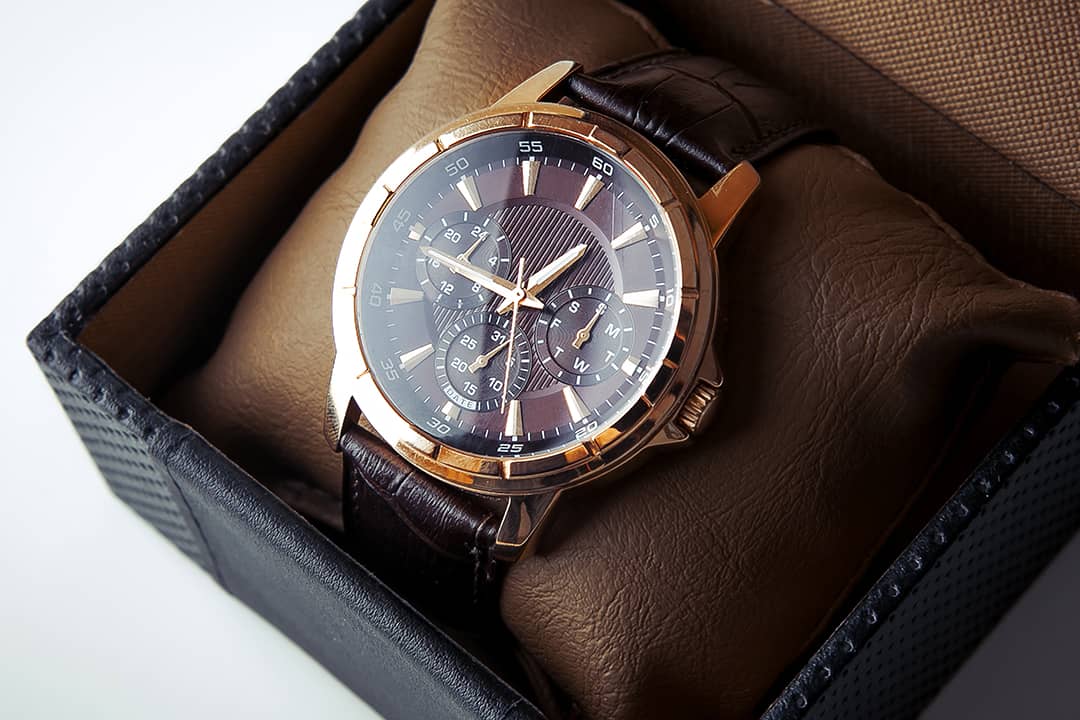
Kuznechik // Shutterstock
How does watch insurance work?
Luxury watches cost tens of thousands of dollars, so they’re an investment that you want to protect. Jewelry insurance — particularly specialized coverage for luxury watches — can help you repair or replace your valuables if they are lost, stolen, or damaged.
How Watch Insurance Works
The first step in protecting your luxury watches (and avoiding the financial loss that can occur if your timepieces are uninsured) is to shop around for coverage and get quotes for premiums from reputable companies with good reviews.
BriteCo reports that your policy cost will ultimately depend on the value of a single watch you want to insure or your entire watch collection, and an appraisal will be necessary to determine that value. Even if you still have the original sales receipt for your watch, indicating what you paid when it was purchased, it’s important to get your timepiece appraised when you want insurance coverage to reflect a current, accurate assessment of its worth. This is especially important for higher-value pieces, although, in some cases, providing a sales receipt may be sufficient if you’re insuring a lower-value watch rather than a luxury watch.
The Appraisal Process
When getting your watch appraised, you’ll want to work with a reputable source and/or jeweler. To begin the process, they will ask you to provide documentation of ownership, such as a receipt or previous appraisal. Usually, this can be done in person or online. If you submit paperwork online, you might be asked to provide additional photos and/or schedule a video consultation. Once the appraiser has everything they need, they will give you their professional advice regarding the worth of your piece and will send formal appraisal documents.
The appraised value helps determine what you will pay for watch insurance. It also applies if you ever need to make a claim to help determine your watch’s market value and/or potential replacement cost, whether your coverage applies to a new, vintage, or appreciating watch or even if it’s a brand name like Patek Philippe, Audemars Piguet, Vacheron Constantin, Rolex, Omega, and Cartier.
Keep in mind that once your watch is appraised, the number isn’t static. Jewelry and watch values fluctuate, so the appraised amount may also fluctuate.
What Does Watch Insurance Cost & What Does It Cover?
If you want to determine your watch or jewelry insurance cost, here’s a simple equation. Most jewelry insurance rates are 1%-5% of your piece’s market value, per year.
For this price, watch insurance will typically cover:
- Theft
- Loss
- Mysterious disappearance
- Damage
In general, it’s always a good idea to check your policy contract for more details about what your specific insurance policy covers, regardless of insurance provider.
Making a Claim on Your Watch Insurance Policy
Once you’re covered, you can rest easy knowing that your luxury watches are protected in the event of any unfortunate accidents. But what happens if you really do face accidental damage, loss, or theft?
If you need to make a claim, the information you’ll need to provide your insurer may vary depending on the specific company’s policies. Insurance companies typically ask for photos of the piece (if damaged) and details of any loss, such as a police report. They may also ask you to provide your appraisal documentation and a detailed inventory of the item(s), including a description.
Some watch insurance does not require customers to pay deductibles for claims, meaning you’ll pay no out-of-pocket costs. This is not the case with every jewelry and watch insurer, as some provide varying levels of coverage with different deductible amounts.
For watches that need to be entirely replaced, the full replacement cost is typically covered if the watch is insured for its full value, even if it’s a limited-edition model or has been discontinued. For watch repairs, the cost is likewise usually covered.
Additionally, unlike homeowner’s insurance, where making a claim can impact your policy and raise your insurance rates in the future, some specialized jewelry insurance providers of watch insurance work differently, and you aren’t automatically “dinged” for having a claim. Be sure to verify whether a specialized watch insurance reports claims to loss-history databases, since this could impact other property insurance, such as homeowner’s.
Watch Insurance vs. Homeowners/Renters Insurance vs. Manufacturer Warranty
Some watch collectors may choose not to invest in specialized watch insurance but instead rely on their existing homeowner’s or renter’s policies for protection. Unfortunately, this does come with some downsides:
- Standard policies may provide limited coverage, typically only covering a few thousand dollars’ worth of repairs or replacement costs
- Deductibles will typically apply to any watch-related claims
- These policies do not cover all potential issues, such as loss or mysterious disappearance
Manufacturers’ warranties, meanwhile, are valuable but very different from watch insurance. They cover mechanical failures and manufacturing defects, whereas insurance covers loss, theft, accidental damage, and any unfortunate event not attributable to normal wear and tear. (Damage is considered any accidental cosmetic damage or breakage to a piece, while normal wear and tear is not the result of any specific accident.) But you should also know jewelry insurance typically doesn’t cover intentional damage or extraneous circumstances, such as military combat.
So, these days it’s easy to get a quote online for insuring your luxury watch, and it’s wise to compare specialized watch insurance coverage versus adding it to a homeowner’s or renter’s policy.
This story was produced by BriteCo and reviewed and distributed by Stacker.